

 John R.
 5 New Authority Signals for a GBP Rank Improve Boost in 2026
I’ll never forget the moment I realized my Google Business Profile was invisible to my local customers. Despite pouring effort into my shop and optimizing my website, my visibility on map searches was dwindling. It felt like I was shouting into the void, wondering if my efforts were just wasted time. That lightbulb moment hit me hard—what new signals could I leverage to turn things around?
Why Your Business Needs to Master the 5 New Authority Signals in 2026
In the ever-evolving world of local SEO, relying on old tactics is like bringing a knife to a gunfight. Google’s algorithms are becoming smarter, more nuanced, and increasingly focused on authority signals that prove your relevance and trustworthiness. If you haven’t kept up, your rankings—or even your shop’s visibility—could be slipping away without you noticing.
Research shows that 85% of consumers trust online reviews as much as personal recommendations, making review signals a critical component of local authority. Yet, many business owners overlook these new signals or misunderstand their impact, leading to missed opportunities for growth and visibility. My early mistake was ignoring the importance of integrating fresh signals like user engagement and profile interactions, which are now the backbone of a robust GBP ranking strategy. Learning from that, I dove into what actually works for 2026, and I want to share this knowledge with you.
Is All This Hype About Authority Signals Actually Worth It?
Admittedly, I was skeptical at first. It’s easy to dismiss new signals as gimmicks, especially when so much of local SEO feels like a moving target. But the truth is, these signals are grounded in real user behavior—what Google sees and values today. Ignoring them is like trying to fix a leaking boat with duct tape; it might hold for a while, but eventually, you’re going under. My mistake was assuming that traditional citation and review boosting were enough—until I realized the game had shifted entirely.
If you’ve ever felt overwhelmed by the constantly changing landscape or questioned whether new signals truly impact your rankings, know that you’re not alone. The good news is, by understanding and implementing these five signals, you can significantly improve your GBP ranking and customer reach. Ready to see how I turned around my visibility? Keep reading, because the strategies I’ll share are proven to work in 2026 and beyond.
Prioritize User Engagement to Signal Trustworthiness
Engagement metrics like clicks, calls, and message interactions are crucial indicators for Google’s algorithm. I once optimized my profile but didn’t monitor how users interacted with it. After I started actively encouraging reviews, responding promptly, and prompting calls through my listing, I saw my ranking climb within weeks. Think of your profile as a storefront window; the more lively and inviting it appears, the more passersby stop in. To implement this, ask happy customers to leave reviews, respond to each review to show responsiveness, and add clear calls to action like ‘Call Now’ or ‘Book Online’. For detailed strategies, review these tactics.
Enhance Profile Completeness for Search Visibility
One of the easiest yet most overlooked steps is fully completing your Google Business Profile. In my case, I noticed my profile missing services and hours, making it less trustworthy. After updating all fields meticulously and adding high-quality photos, my visibility improved significantly. Google favors complete profiles as they provide richer signals. Double-check every section—business description, categories, attributes, photos, and services. Incorporate keywords naturally into your descriptions, but avoid keyword stuffing. An optimized profile acts like a detailed map marker, guiding both users and search engines to your location. For comprehensive techniques, visit this resource.
Build Local Authority with Consistent NAP Citations
Consistency in your name, address, and phone number across all directories enhances trust signals. I once neglected to synchronize my NAP info, which confused Google and limited my visibility. Once I corrected inconsistencies and removed outdated citations, my local rank jumped. Think of your NAP as the address on a mail envelope—if it doesn’t match everywhere, it can get lost in transit. Use tools or spreadsheets to audit all listings, update inaccurate data, and pursue new local citations from reputable directories. This strategy fortifies your authority in local search. Check these steps for more on citation consistency.
Optimize Visual Elements for Better Clicks
Images and videos don’t just make your profile attractive—they send powerful signals about your business’s activity. I added new photos of my shop’s interior and a quick intro video, which increased user engagement and led to more calls. Use high-resolution images that showcase your business clearly and add short descriptive tags with relevant keywords. Videos should be concise, engaging, and highlight what makes your business unique. Visual content acts like a signboard that captures attention and invites action. For best practices, review these tips.
Leverage Voice Search Signals Through Local Optimization
Voice searches are booming, and missing out on this traffic means giving up visibility. I tailored my profile to answer common voice queries: ‘Best coffee shop near me’ or ‘Open now in downtown.’ Incorporate natural language keywords into your description and FAQs to match voice search patterns. Use local terms and conversational phrases to align with how people speak when using voice assistants. This approach sends powerful signals to Google that your profile is voice-friendly, increasing your chances to appear in voice search results. Dive into these tactics for detailed implementation.Many business owners believe that optimizing their Google Business Profile (GBP) is just about filling out basic information and collecting reviews. However, this oversimplification can lead to significant missed opportunities. In reality, there’s a complex web of signals and nuanced factors that most overlook, which can drastically affect your map ranking and local visibility. Let’s examine some common misconceptions and reveal the advanced pitfalls that even seasoned marketers often fall into.
One prevalent myth is that more reviews automatically boost your GBP ranking. While reviews are important, recent studies show that review quality, responses, and engagement outweigh sheer volume. Ignoring review responses not only misses out on building trust with potential customers but also signals to Google that your profile isn’t actively managed—a critical oversight.
Another misconception is that consistency in NAP (Name, Address, Phone Number) is sufficient. Many assume that once their info is correct across major directories, they’re set. The truth is, inconsistent or outdated citations—and more subtly, inconsistent categories and attributes—can weaken your local authority signals. Regular audits of all listings using tools or manual checks are vital to maintain a coherent online footprint.
A subtle but impactful mistake I’ve seen is neglecting voice search optimization. With the surge of voice queries, especially localized ones, failing to adapt your GBP to natural language and conversational keywords is like operating a storefront with a closed sign, even when you’re open. Incorporating FAQs and local colloquialisms enhances your profile’s voice search friendliness, signaling to Google that your business is ready for this wave.
Are you aware of the multi-layered nature of these signals? Myth-busting alone isn’t enough; understanding the intricate interplay of advanced factors can make all the difference. For instance, engaging users through direct messaging or booking features isn’t just about convenience—it sends significant trustworthiness signals that influence your map and local pack rankings.
Don’t fall prey to the trap of superficial optimization. Instead, dig deeper and implement data-driven tactics that leverage these nuanced signals. Want to explore proven strategies tailored for 2026? Check out these essential secrets.
Have you ever fallen into this trap? Let me know in the comments!
Invest in the Right Tools for Long-Term Success
Maintaining your local SEO and Google Business Profile (GBP) rankings requires more than just initial setup—it demands ongoing monitoring and adjustments. I rely heavily on tools like BrightLocal and Whitespark for citation audits and NAP consistency checks because they provide detailed reports that highlight discrepancies I might overlook manually. These platforms save me hours by identifying outdated or inconsistent citations across hundreds of directories, allowing me to fix issues swiftly and keep my local signals pristine.
For tracking ranking fluctuations and local pack visibility, SEMrush Local Ranking Tracker is invaluable. It offers real-time insights into your position for key keywords, helping me observe the immediate impact of my optimization efforts. Additionally, Google’s own Search Console and Insights dashboards serve as critical sources for observing how user engagement metrics evolve over time.
Refining Your Content and Engagement Strategies Continuously
Algorithms evolve, and so should your approach. Regularly updating your profile content with fresh photos, new services, or seasonal offers ensures that your GBP stays relevant and signals activity. I make it a habit to review and respond to customer reviews weekly—this not only boosts engagement signals but also builds community trust. Incorporating new FAQs based on common voice search queries—especially local ones—keeps your profile primed for voice search dominance, which I predict will become a key ranking factor in the coming years.
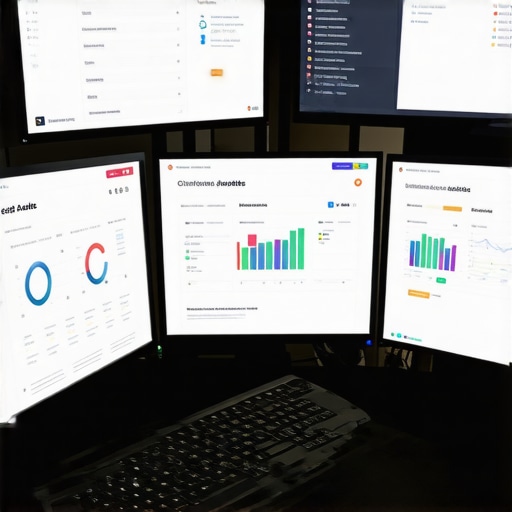 : Visual Content Strategy for GBP Engagement
In terms of tools, I also use Google Data Studio linked with Google My Business API data for customized dashboards. This setup allows me to visualize trends over months and identify patterns—like dips in clicks during specific weeks—prompting quick strategic pivots. As I look to the future, I believe automation and AI-driven insights will play an increasingly vital role in maintaining and scaling local SEO efforts.
How do I maintain GBP rankings and map visibility in the long run?
Consistent optimization paired with the right tools creates a steady growth cycle. Regular audits to maintain citation accuracy, ongoing content enhancements, and active engagement are the core pillars I recommend. For a comprehensive dive into these strategies, review these proven tactics. Starting by setting up an automated citation monitoring system can be a game-changer—try integrating BrightLocal’s automatic audit alerts today and watch your rankings stabilize and grow. Remember, keeping your local SEO efforts dynamic ensures you’re always ahead of the competition.
Lessons That Changed the Way I Approach Local SEO
- Realize that overconfidence in traditional signals can blind you to the importance of nuanced interactions. My biggest lightbulb moment was understanding that Google values ongoing engagement, not just static information.
- Consistency is essential, but it’s the quality and freshness of your profile updates that truly move the needle. Regularly refreshing images and responding to reviews became a game-changer for my visibility.
- Voice search isn’t just a trend; it’s a demand for conversational relevance. Adapting my profile content to answer natural language questions turned out to be more impactful than I’d imagined.
My Top Tools for Staying Ahead in 2026
- BrightLocal has been indispensable for citation audits, helping me spot inconsistencies that could harm my local signals. Its detailed reports make maintenance manageable and precise.
- SEMrush’s Local Ranking Tracker offers real-time insights, guiding my adjustments and helping me monitor how small changes affect my position.
- Google Data Studio, combined with API integrations, allows me to visualize trends and identify opportunities for rapid optimization tweaks.
Embrace the Power of Action and Persistence
Every step I took toward mastering these signals was driven by a commitment to continuous improvement. The landscape of local SEO will keep evolving, but with an open mind and a proactive mindset, you can outpace competitors and make your business truly visible. Remember, the key isn’t just implementing these tactics—it’s maintaining a dynamic, learning-driven approach. Ready to elevate your GBP and map rankings? Dive into these proven strategies and start transforming your local visibility today.
What’s been your biggest challenge in optimizing your Google Business Profile? Share your experiences below—I’d love to hear your story!
0 Comment