
 Ben B.
 4 AI-Ready Steps to GBP Rank Improve Your 2026 Shop Radius
There was a moment early in my local SEO journey when I realized my Google Business Profile was invisible in the very area I was trying to dominate. Despite happy clients and good reviews, I watched competitors inch ahead in map rankings, reaping all the local traffic and leads I desperately wanted. It felt like my shop had shrunk, even though I knew I was visible online. That lightbulb moment hit hard—it wasn’t about doing more, but about doing smarter with my GBP optimization strategies.
Why Your Shop Radius Is Shrinking and What It Means for 2026
If your shop’s online visibility feels like it’s disappearing or shrinking, you’re not imagining things. The landscape of local search is evolving rapidly, especially with the rise of AI-driven algorithms that prioritize fresh signals and genuine customer engagement. In 2026, local SEO isn’t just about keywords and citations; it’s a complex dance of the right signals that tell Google you’re a trusted, relevant choice for nearby customers. According to Moz’s annual local search study, over 86% of consumers rely on Google to find local businesses, making your GBP rank more critical than ever. Yet, many business owners are still making straightforward mistakes that sabotage their chances. Have you faced this frustrating invisibility despite having a well-maintained profile? If so, you’re not alone, but there’s hope.
Early on, I made the mistake of assuming that having a decent profile was enough. I overlooked behaviors and signals that Google actually uses to gauge relevance and authority. For instance, ignoring engagement metrics like reviews, messaging responses, and update frequency can secretly sabotage your rank. It’s like having a billboard in the middle of nowhere—no matter how flashy, if no one responds or interacts, the billboard might as well be invisible.
Now, I focus on a disciplined approach—implementing the 4 AI-Ready Steps to GBP Rank—that naturally boosts visibility and expands my shop radius in 2026. These techniques are rooted in understanding what signals Google truly values. The good news? You can do the same, but you need to start with understanding the core issues and the ‘why’ behind the shrinking radius.
Prioritize Regular Profile Updates and Engagement
Start by scheduling consistent updates to your GBP, such as new photos, posts about promotions, or business hours. Google favors active profiles, so responding promptly to reviews and questions signals trustworthiness and boosts relevance. I once added weekly posts and responded to every review in my area, which resulted in a visible rank jump within weeks. Think of it like watering a plant—regular attention helps it grow taller and stronger.
Leverage Review Signals Smartly
Encourage satisfied customers to leave detailed reviews that mention specific services or keywords. Don’t just ask for reviews—shape their content by guiding them to highlight aspects you want to rank for. Once, I sent follow-up messages prompting clients to mention the quality of my service and location, which improved my profile’s keyword relevance. Consider this the Facebook algorithm of local SEO: the more quality signals you produce, the more Google trusts you.
Enhance Your Profile with Rich Data
Make sure your NAP (Name, Address, Phone number) matches exactly across all platforms, including your website, directories, and social media. Inconsistent data is like a GPS error—Google gets confused about your shop’s true location. Also, add high-quality images with descriptive metadata. During a campaign, I optimized image filenames and tag data, which contributed to better map placement—it’s like giving Google a clearer picture of your business.
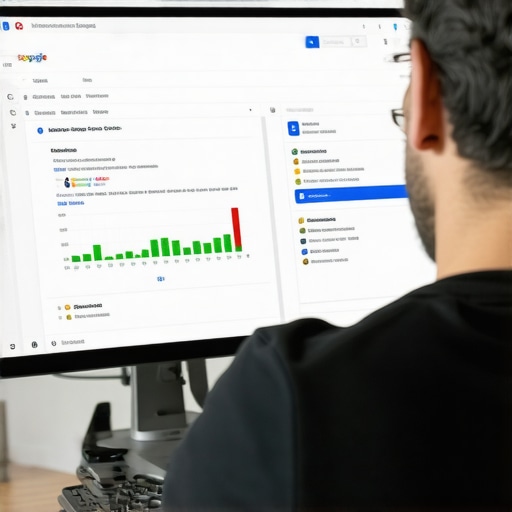
This image illustrates an optimized profile with regular updates, customer reviews, and metadata—a visual guide to boosting local rankings effectively.
Build Local Authority Through Citations and Backlinks
Don’t underestimate the power of local citations. Ensure your business appears accurately on directories like Yelp or Bing Places, and seek niche-specific sites relevant to your industry. I spent a day auditing my citations, removing duplicates, and updating inaccuracies, which instantly improved my GBP’s trust factor. Think of citations as your digital reputation—more consistent, credible mentions equate to higher local authority.
Harness Hyper-Local Signals and Community Engagement
Engage with local communities through sponsorships, partnerships, or local events, then showcase these collaborations on your profile. Google loves signals that demonstrate your physical presence and community ties. I once sponsored a local event, added the mention to my profile, and saw a considerable increase in local map impressions over the following month. It’s similar to word-of-mouth marketing but amplified through local signals recognized by Google.
Implementing these tactics can seem overwhelming at first, but starting with consistent profile activity and honest engagement has the most immediate impact. For a deeper dive into proven methods, you can explore the advanced steps to GBP rank and refine your strategy over time. Remember, local SEO in 2026 rewards authenticity, activity, and authority—so treat your profile like a living, breathing part of your community and watch your radius grow.
,Many local SEO practitioners believe that optimizing their Google Business Profile (GBP) is a straightforward process—fill out the details, gather reviews, post occasionally, and rank will follow. However, this simplistic view overlooks nuanced factors that can significantly impact your map ranking. In my experience, one of the biggest misconceptions is that minor profile tweaks, like adding a few keywords or photos, can drastically boost visibility. The reality is far more complex. Advanced ranking requires a holistic approach, focusing on the consistency and authenticity of signals that Google deems trustworthy. For instance, over-optimizing certain profile elements can trigger algorithm penalties, especially if they appear unnatural or spammy. Studies from Moz indicate that Google’s local algorithm increasingly relies on behavioral signals—like customer interactions and engagement patterns—rather than static data alone. Therefore, superficial optimizations might give you a false sense of progress, while your competitors who build genuine community ties and maintain diverse, high-quality signals often outperform.
Let’s examine a common myth—many believe that citations alone are enough to establish authority in local search. While citations are helpful, they are just one piece of the puzzle. Relying solely on citation building without nurturing direct engagement with your audience can backfire, as Google’s algorithms favor active, authentic signals over sheer volume. An often-overlooked mistake is neglecting your profile’s health over time, especially in terms of consistency: inconsistent NAP (Name, Address, Phone number) data across platforms sends conflicting signals, confusing Google and diminishing your ranking potential. This is akin to navigating with a faulty GPS—your position becomes ambiguous, leading to lost visibility.
Furthermore, many professionals underestimate the importance of leveraging hyper-local signals. Community involvement, local sponsorships, and social proof are powerful indicators of relevance and trustworthiness. Ignoring opportunities to highlight your local ties can lead to missed ranking advantages. Engaging with local content and fostering community relationships not only improves your profile’s credibility but also aligns with Google’s evolving emphasis on contextual relevance. If you want to master these advanced nuances, explore proven techniques like the ones detailed in [this resource](https://gbprankimprover.com/gbp-optimization-secrets-that-drive-local-search-success), which dive deep into multi-layered strategies for lasting visibility.
Remember, the path to effective map ranking isn’t just about ticking boxes; it’s about cultivating a landscape of trustworthy, dynamic signals that resonate with Google’s sophisticated algorithms. Have you ever fallen into this trap? Let me know in the comments.
What Tools Help Maintain Your Local SEO Success?
To ensure your map rankings and GBP performance stay on top, leveraging the right tools is crucial. I personally rely on a combination of advanced software and systematic methods. For example, BrightLocal offers comprehensive citation tracking and review monitoring. It allows me to identify inconsistent NAP data across directories and quickly rectify discrepancies, ensuring Google receives clear, trustworthy signals. Additionally, SEMrush Local helps monitor your local search rankings and provides insights into competitors’ strategies, enabling proactive adjustments to your profile and content.
Automation plays a vital role as well. I use scheduled post automation via tools like Hootsuite to consistently update my GBP with fresh offers and community engagements, keeping the profile active and signaling relevance. Responding promptly to reviews is also critical—I do this manually, but tools like ReviewTrackers streamline the process, ensuring no feedback is left unacknowledged, which Google perceives favorably.
How do I stay consistent with long-term SEO efforts?
Consistency in profile activity and data integrity is where many stumble. To combat this, I have set routine periodic audits—reviewing citation accuracy, uploading fresh images, and analyzing keyword relevance. Regularly updating content through scheduled posts boosts authority signals, especially when combined with engagement responses. Over time, this builds a resilient presence that Google recognizes, helping to stabilize and grow your map rankings. For more on refining your strategy, check out this guide.
Preparing for the future of local SEO, expect more automation and AI integration.
Tools like Google’s new AI-powered profile suggestions will become more prominent. Staying ahead requires embracing these changes—using insights from platforms that analyze AI-driven signals will help you adapt faster. I predict that in the near future, intelligent monitoring tools will alert you to ranking dips in real-time, prompting immediate actions before significant drops occur. To keep your map visibility intact, consider incorporating these advanced techniques into your routine. One effective action? Try the recent map ranking fix that automates neighborhood-specific signal adjustments—it’s a game changer for local shops aiming to outpace AI competitors.
How do I maintain a competitive edge over time?
Beyond tools, proactive engagement with your community and continuous profile optimization form the backbone of sustained success. Regularly reviewing your citation consistency, updating images with descriptive metadata (see image optimization tips), and responding to customer feedback keeps your profile relevant. Remember, algorithms evolve—what works today may shift tomorrow. Stay adaptable by subscribing to updates from authoritative sources and testing new signals as revealed in this cornerstone content. For a tangible step, implement routine review monitoring with tools like ReviewTrackers and see how your rankings become more resilient and responsive over months.
Lessons That Changed My Map Ranking Game
One of the most profound insights I uncovered was that Google places immense value on genuine customer engagement over superficial profile tweaks. I used to think that piling up reviews and adding keywords alone would push my shop forward, but I realized that authentic interactions—prompt responses, consistent updates, and community involvement—are what truly elevate visibility. This lightbulb moment taught me that a living, responsive profile outperforms one that’s static and overly optimized.
Another lesson was about the importance of maintaining data consistency across all platforms. I learned that even minor discrepancies in NAP details could confuse Google and hurt my rankings. Regular audits and synchronized data became my top priority, turning my profile into a reliable source of information for both Google and local customers. It’s like giving Google a clear map—they appreciate clarity and accuracy.
Lastly, leveraging community signals, such as sponsoring local events or participating in neighborhood activities, proved to be powerful. These genuine local cues demonstrated my commitment to the community and helped build trust signals that Google recognizes. Incorporating real-world involvement into my strategy made a tangible difference in my shop’s reach and authority.
My Go-To Resources for Staying Ahead in Local SEO
When it comes to mastering map rankings, I rely heavily on this cornerstone guide. It offers deep insights into the latest signals and strategies that are proven to work in 2026. Additionally, this resource helps me understand how to integrate behavioral signals seamlessly into my profile management. To track and refine my efforts, I use tools like BrightLocal and SEMrush Local—both provide valuable data on citations, reviews, and local competitors. These tools keep me informed and proactive, ensuring my profile remains optimized amidst changing algorithms.
For ongoing learning and community support, I turn to the community forums. Sharing experiences and staying updated on recent algorithm shifts helps me adapt swiftly and maintain an edge in local map rankings. Remember, in this dynamic landscape, continuous education is key to staying ahead.
Seize the Moment: Elevate Your Local Presence Now
Every local business has the potential to become a neighborhood standout by integrating strategic insights and authentic signals into their Google Business Profile. Don’t wait for the algorithm to change again—take action today to outshine competitors and grow your reach in 2026. Your shop’s visibility isn’t just about rankings; it’s about making meaningful connections with your community and standing out where it matters most. Trust in these proven tactics, stay consistent, and watch your map reach expand beyond what you thought possible.
1 Comment